How to Verify a Chinese Metal Parts Supplier Before Ordering
Before you wire a deposit, verify the entity, the facility and the capability. This guide walks through the checks that separate a real manufacturing partner from a trading desk presenting itself as one.
TL;DR — Key Takeaways
- Verify the legal entity first: business license, the eighteen-character unified social credit code, and a registered address that matches where the parts are actually made.
- Know whether you are buying from a factory or a trading company. Both can work, but they carry different capability, cost structure and accountability.
- Capability is proven with evidence you can inspect — equipment lists, inspection instruments and comparable parts already in production — not with assurances.
- A documented, independently verified quality system beats a certificate PDF. Confirm the certificate, its scope and the inspection workflow behind it.
Why Verification Comes Before Price
Buying metal parts from China goes smoothly when the supplier is genuine and badly when it is not. The difference rarely appears in the quotation — it appears later, in a deposit that buys nothing, a drawing that was never really understood, or a shipment that fails your incoming inspection. Verification is the work you do before money moves, and it is far cheaper done up front than corrected afterwards.
A quote tells you a price. It does not tell you who will actually machine the part, whether the address on the invoice is where production happens, or whether the company can hold your tolerances across a whole run. Each of those questions has an answer, and each answer can be checked with documents, records or a visit. This article sets out the sequence we use, in the order the checks should happen.
| Stage | What to Verify | Evidence to Request |
|---|---|---|
| 1. Entity | Legal existence, ownership, business scope | Business license, unified social credit code, registration extract |
| 2. Model | Factory or trading company; who manufactures | Registered address vs production site; walkthrough or visit |
| 3. Capability | Equipment, processes, comparable work | Equipment list, inspection instruments, past project photos |
| 4. Quality system | Documented inspection and traceability | ISO 9001 certificate with scope, inspection workflow, sample reports |
| 5. Stability | Capacity, cash flow, delivery record | Written schedule, references, agreed payment and inspection terms |
Step 1 — Verify the Legal Entity
Start with the least glamorous check and the most decisive: confirm that the company you are about to pay legally exists and is exactly what it claims to be. Every registered business in China holds a business license carrying a unified social credit code — a single identifier that ties the company to one official registration record. The license states the legal name, the registered capital, the date of establishment, the legal representative, the registered address and the approved business scope.
Read the business scope carefully, because it tells you what the company is licensed to do. A name that includes words like machinery or casting does not automatically mean manufacturing is approved or performed; some suppliers are licensed only to trade. Check that manufacturing of your product type appears in the scope, not merely sales. Then reconcile the registered address with reality. A licence address that turns out to be an office while the workshop sits elsewhere is common and not automatically a problem — but the production site still needs to exist, and you should know where it is.
What to Confirm on the Licence
- The legal name matches the name on the proforma invoice and the bank account.
- The business scope covers manufacturing, not only trading.
- Registered capital and establishment date are plausible for the claimed scale.
- The bank account beneficiary name matches the licensed legal name exactly.
- The supplier will share a production address and agree to a walkthrough.
Step 2 — Factory or Trading Company? Decide What You Actually Need
The second question is whether you are dealing with a manufacturer or a trading company. Neither is inherently dishonest, and each has a role. A trading company can consolidate several processes, manage export paperwork and communicate in your language; a factory controls its own capacity and process first-hand. The problem is not the model — it is dealing with one while believing it is the other.
Ask directly and watch how the answer is given. If the reply is a factory, ask for the production address, the equipment list and a live or recorded walkthrough of the shop floor. If the reply is a trading company, ask which factories it uses, whether those factories are audited, and who is accountable when a part fails. A supplier that is honest about its model is usually a supplier that can be worked with. For a structured way to verify the production site itself, see our guide to supplier audits in China.
One practical risk with undisclosed trading companies is subcontracted production. When the party you pay is not the party that machines the part, quality problems become harder to trace and responsibility becomes harder to pin down. If work is subcontracted, you should know the companies involved and how the work is controlled — and that question is easier to answer before the order than after a rejection.
Step 3 — Demand Capability Evidence, Not Assurance
Production Capability
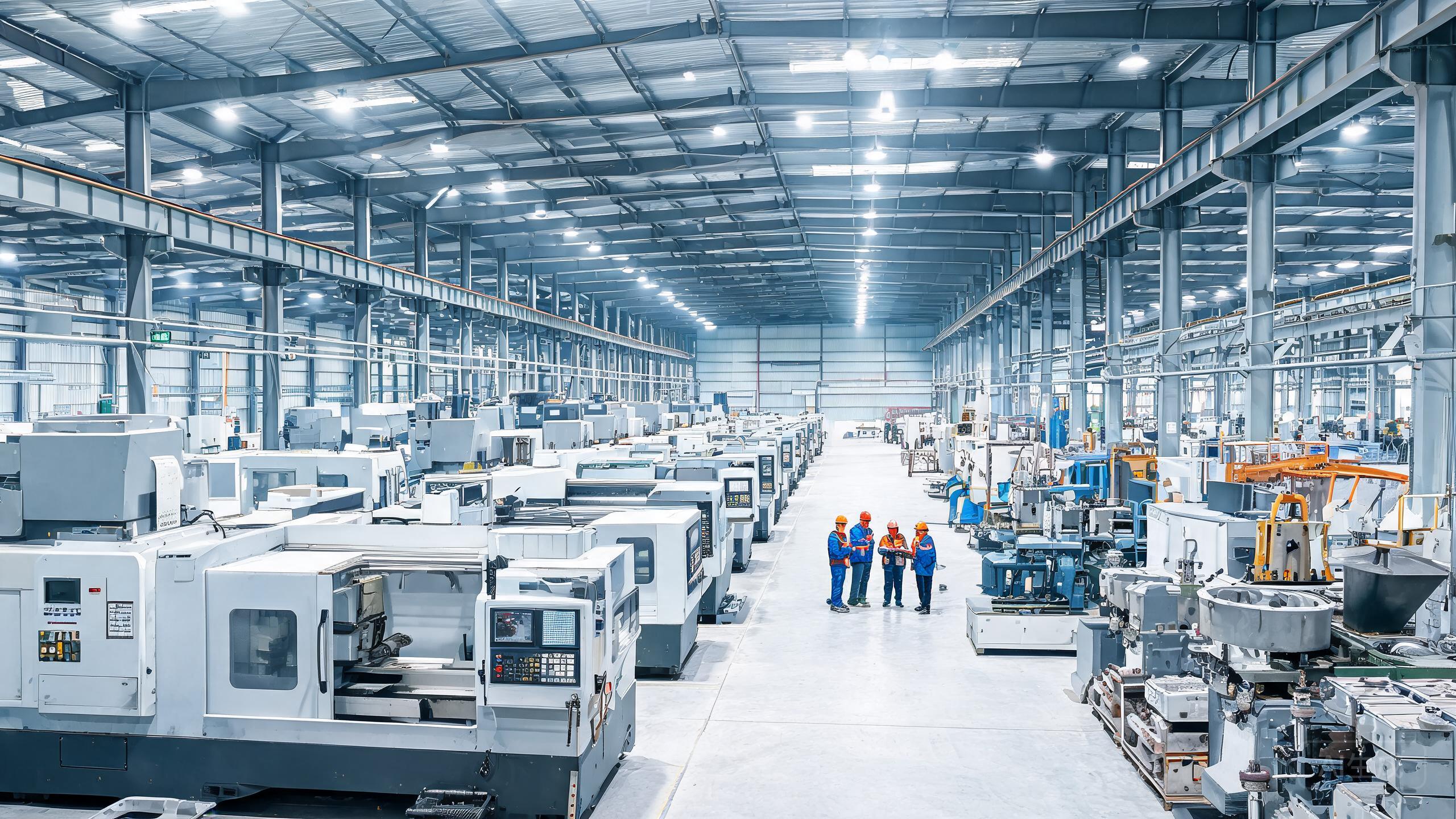
Capability is measurable, so ask for the measurements. A supplier that actually makes parts can describe its equipment in specifics: the casting or forging method, machine sizes and tonnage, CNC spindle count and axis configuration, heat-treatment furnaces and their controls. Requests for these details are normal among engineers, and a supplier that cannot answer them has probably never operated the equipment it is describing.
Inspection Capability
Inspection capability matters just as much as production capability. Ask which instruments the supplier or its partners use to check the parts it makes: coordinate measuring machines for geometry, optical emission spectrometry for material identification, hardness testers, and surface roughness gauges. Then ask for evidence that these are actually used — sample inspection reports, not just a list. A structured way to look at all of this on site is our supplier audit checklist.
- Casting, forging or machining equipment, with models and capacity.
- Heat-treatment and surface-treatment capability, in-house or through qualified partners.
- Metrology: CMM, spectrometer or PMI, hardness and roughness instruments.
- Comparable parts already in production, with photos and drawings where confidentiality allows.
Step 4 — Check the Quality System, Not Just the Certificate
Almost every supplier will send a quality certificate on request, and almost none of them will be checked. Treat the document as a starting point. Look at the certificate number, the issuing body and, above all, the scope — whether it covers the processes and products you are buying. A certificate for trading does not cover manufacturing, and a certificate for one plant does not automatically cover a sister plant that runs your order.
Behind the certificate there should be a system you can see: incoming material control, documented in-process checks, final inspection against your drawing, and traceability from a heat or lot number through to the shipped parts. Ask how sampling is decided — a defined plan such as ISO 2859-1 sampling is a sign of a real system — and what evidence ships with each batch, such as material certificates issued to EN 10204 3.1. On the inspection side, our quality control and inspection in China guide explains how final inspection is planned and reported.
Before mass production starts, a first article inspection gives you an early, low-cost signal that the supplier understood the drawing. See our guide to first article inspection for what a proper first-off check should include.
Step 5 — Assess Financial and Delivery Stability
A supplier that can make the sample but not the production run is still a problem. Stability has two parts: money and capacity. Money is about whether the supplier can buy material and pay workers while your order is open, which shows up in how it reacts to reasonable payment terms. Capacity is about whether your volume is realistic for the equipment it has, or whether it is promising a schedule it cannot keep.
Ask for a written schedule that separates tooling, sampling, production and inspection, and ask what typically delays each step. Ask for references — customers in a similar industry, or projects of comparable complexity — and treat vague answers accordingly. If the supplier subcontracts, ask who and how the work is controlled. A supplier that will not put a delivery plan in writing is already telling you something about the delivery plan. For the wider picture of buying industrial parts in China, see our overview of industrial parts sourcing in China.
Red Flags That Should Stop an Order
Most of these signals are not suspicious on their own, but each is cheap to check and expensive to ignore. When two or three appear together, slow down before the deposit, not after the shipment.
- Unwilling to share a business license, unified social credit code or factory address.
- The bank account beneficiary name differs from the licensed legal name.
- Refuses any form of factory visit, video walkthrough or third-party inspection.
- Full payment demanded by untraceable channels, or terms that shift after quoting.
- Cannot describe its own equipment, processes or inspection instruments.
- No written schedule, no named contact, and pressure to pay before scope is fixed.
How GRDH Precision Helps
GRDH Precision is not a factory — we are a sourcing and quality partner based in China who works on your side of the table. We verify suppliers before you commit: we check the business license and entity against official records, confirm factory-versus-trader status, assess equipment and capability, and evaluate the quality system behind any certificate. When your order runs, we follow it through with documented inspection and shipping. See our supplier audit and quality inspection services, and our overview of industrial parts sourcing in China.
Conclusion
Verifying a supplier is not distrust; it is the ordinary engineering groundwork that makes an order safe. Confirm the legal entity, establish whether you are buying from a factory or a trader, demand capability evidence you can check, look behind the quality certificate, and judge stability from a written plan and real references. Do that before the deposit, and the surprises are far more likely to surface at the sample stage, where they are cheap, than to arrive disguised as a finished shipment. For more guides like this, browse the GRDH blog.
Want Your Next Supplier Verified First?
Send us the supplier you are considering, or the drawing you want to place. We will check the entity, the site and the capability, and report back before you commit a deposit.
Start a Project →