Supplier Audit Checklist: What to Check in a Chinese Factory
A ready-to-use checklist for auditing a Chinese factory, organised by category — legal entity and qualifications, capacity and equipment, quality system, incoming material control, process control, inspection capability, environment and safety, and reference customers.
TL;DR — Key Takeaways
- A supplier audit is a structured check of entity, capacity, quality system and process control, run before you commit to a production order.
- Every category has a document trail that should already exist. Ask for the records, not the assurances.
- The strongest signals are traceability from raw material to finished part, controlled special processes, and calibrated inspection equipment.
- Score findings honestly. A critical gap in material control or heat treatment should stop an order; minor housekeeping issues usually should not.
How to Use This Checklist
This checklist is written to be printed and carried. It is organised into eight categories that follow the order material moves through a factory: who the company is, what it can do, how it controls quality, then material, process, inspection, workplace and finally its record with customers. You do not need to be a metallurgist to use it; you need to know what evidence each answer should produce.
Audit the production site, not the meeting room. Ask each question of the person who actually runs that step, and ask to see the record that proves it. If you cannot visit, a documented audit by a third party on the ground substitutes for most of it — our guide to supplier audits in China explains how that is run and what it covers.
The Audit Checklist by Category
The table below is the core of the checklist. For each category it lists the key items to check and the evidence that should satisfy you. Use the third column as your acceptance test: if the evidence exists and matches, the item passes. If it does not exist, note it as a finding rather than assuming the factory does the right thing informally.
| Category | What to Check | Evidence That Satisfies You |
|---|---|---|
| 1. Legal entity & qualifications | Business license & unified social credit code; scope includes manufacturing; entity matches the bank account; any industry-specific qualifications | License copy, registration extract, certificates with their scope shown |
| 2. Capacity & equipment | Casting/forging/CNC equipment with models and tonnage; heat-treatment furnaces; in-house vs outsourced steps; capacity vs your volume | Equipment list, capacity statement, maintenance records, shop-floor photos |
| 3. Quality system | ISO 9001 with scope; documented procedures and work instructions; corrective and preventive action; internal audits and management review | Certificate, quality manual and procedures, CAPA records, internal audit reports |
| 4. Incoming material control | Material certificates to EN 10204 3.1; chemical verification or PMI; approved suppliers; segregation and traceability of stock | Incoming inspection records, material certificates, PMI logs, marked stock |
| 5. Process control | Work instructions and parameters; first article approval; heat-treatment records; welding procedures and welder qualification; special processes controlled | Travellers or routers, process records, WPS/PQR, heat charts, first-off approval |
| 6. Inspection capability | Final inspection against your drawing; calibrated gauges, CMM and instruments; defined sampling, e.g. ISO 2859-1; inspection reports issued per batch | Inspection reports, calibration certificates, CMM programs, sampling plan |
| 7. Environment & safety | Housekeeping and 5S; extraction of dust and fume; personal protective equipment in use; waste handling; safety records | EHS policy and records, and direct observation on the walkthrough |
| 8. Reference customers | Customers in a similar industry; projects of comparable complexity; repeat business; contactable references | Customer list where permitted, sample projects, references you can contact |
What a Good Answer Sounds Like
Legal Entity and Qualifications
On legal entity and qualifications, a good answer is short and documented. The supplier names its licensed legal entity, shows a business license whose scope includes manufacturing, and confirms that the bank account beneficiary matches that name. If your product sits in a regulated field, ask which qualifications apply and see the certificates with their scope — not just a logo on a brochure.
Capacity and Equipment
On capacity and equipment, specificity is the signal. A supplier that can list its furnaces, machine tonnage and CNC configuration, and that knows which processes are in-house and which are outsourced, is telling you it runs the floor itself. Ask what share of its capacity your order would take, and check that the schedule it proposes is consistent with that answer.
Quality System and Material Control
On the quality system and incoming material control, the thread to follow is traceability. Ask to see how a heat number or lot number is recorded when material arrives, how it is verified against the certificate issued to EN 10204 3.1, and how it is carried onto the finished part. A factory that can walk you along that thread — and that keeps material segregated and marked — has the foundation the rest of the audit depends on.
Process Control and Inspection
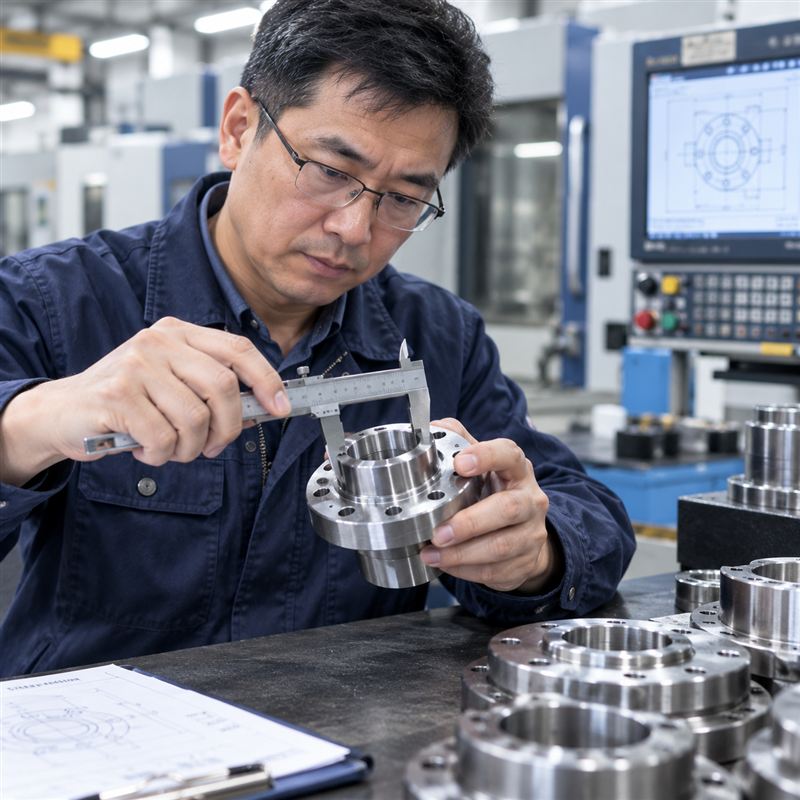
On process control and inspection, look for the records behind the parts. Work instructions, heat-treatment charts, welding procedures and welder qualification, and first article approval all leave paper. So should inspection: final checks against your drawing, calibrated gauges and CMM programs, and a defined sampling plan such as ISO 2859-1. A structured first-off review belongs here too, and our guide to first article inspection explains what it should contain.
Environment, Safety and References
On environment, safety and references, use your eyes and then your follow-up. Good housekeeping, extracted dust and fume, and workers wearing the right protection are visible within minutes, and a factory that manages them usually applies the same discipline to quality. On references, ask for customers in your industry or projects of similar complexity; a supplier that cannot offer one is either very new or very guarded, and both are worth knowing before you order.
Scoring Findings and Making the Call
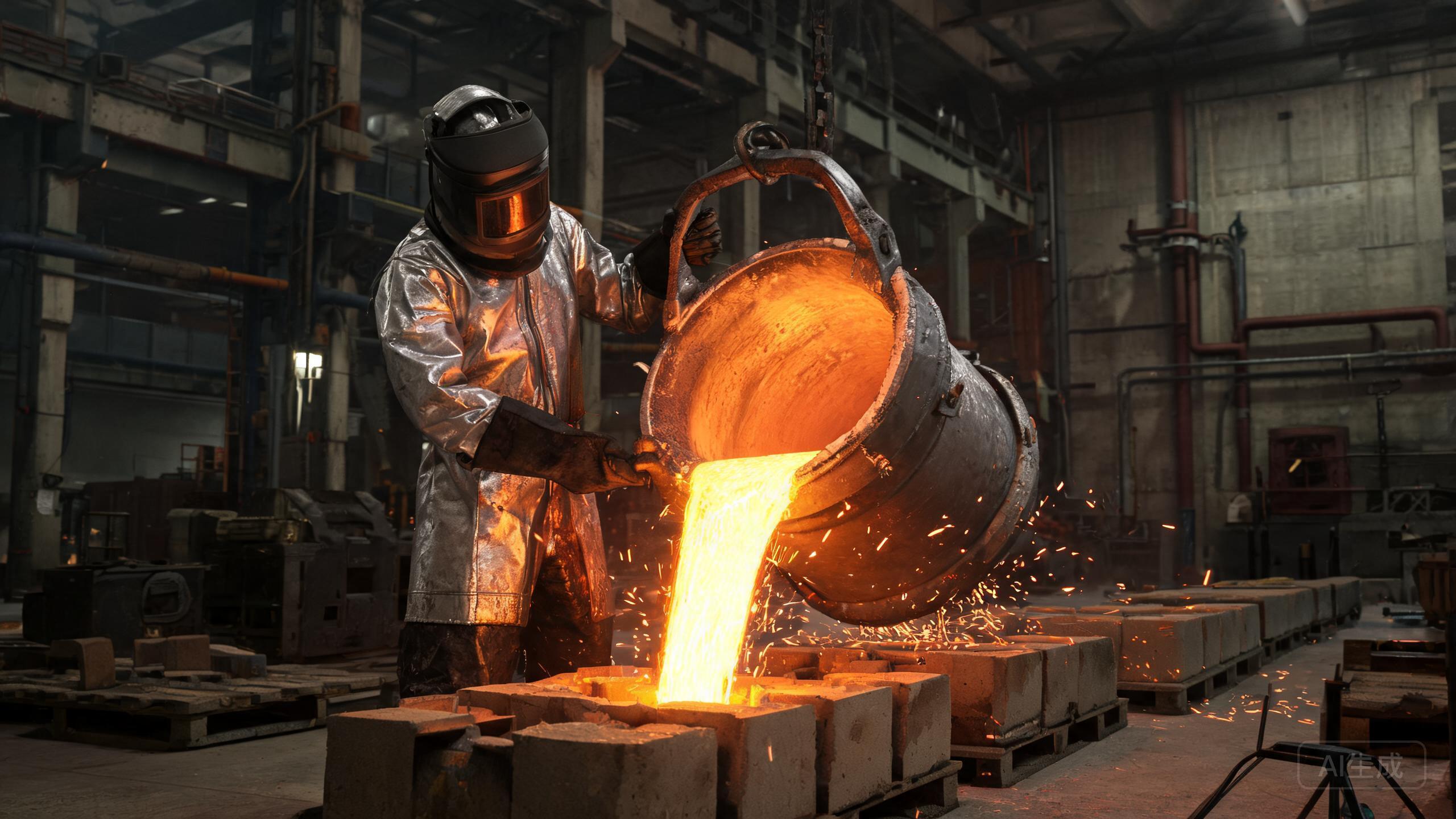
An audit produces findings, and findings need a consistent scale. We group them into three tiers. Critical findings are those that put the parts themselves at risk — uncontrolled heat treatment, material that cannot be traced, or inspection that never happened. They stop the order until corrected and verified. Major findings, such as a missing calibration record, an undocumented process or weak incoming inspection, need a corrective action and a re-check before production. Minor findings are housekeeping and documentation tidy-up; record them and confirm improvement on the next order.
The judgement to make is not whether a factory is perfect, because almost none are, but whether the gaps it has could reach your part. A minor gap that never touches your processes is not worth delaying a schedule for; a critical gap in the process that makes your part is not something a discount can fix. When findings need independent verification during production, our quality control and inspection in China service carries the audit through to shipment. For where auditing fits in the wider buying process, see industrial parts sourcing in China.
Two habits make an audit worth the day it takes. First, write findings down as you go, with the evidence you saw and the tier you assigned, so that the report does not drift from what actually happened on the floor. Second, agree a follow-up: who will close each corrective action, by when, and what proof will be accepted. An audit that ends with a list and no owner tends to produce the same findings next year.
Keep the checklist as a living document. Each time you audit a supplier, add the questions that turned out to matter and remove the ones that never did. Over time, your own short list — built from your own failures and near-misses — becomes more useful than any generic template, because it reflects the risks you have actually seen in your product.
How GRDH Precision Helps
GRDH Precision is not a factory — we are a sourcing and quality partner based in China. We run supplier audits against exactly this kind of checklist: verifying the legal entity, assessing capacity and equipment, and reviewing the quality system, material control, process control and inspection records on site. You receive a written findings report with photographs and a severity tier for each gap, so the decision to proceed is yours and it is evidence-based. See our supplier audit and quality inspection services.
Conclusion
A checklist only earns its keep if it changes a decision. Use it to build a picture of the supplier as a system — entity, capacity, quality, material, process, inspection, workplace and track record — and then score what you find so that real risks drive real actions. Do the audit before the order, require corrective actions where they matter, and the order you place will rest on evidence rather than optimism. For more on working with suppliers in China, browse the GRDH blog, and if you are still selecting a supplier, start with how to verify a supplier before ordering.
Ready to Audit a Supplier?
Tell us the factory you are considering. We will run a structured audit against this checklist and send a findings report with photographs and clear next steps.
Start a Project →