Vacuum Casting Explained: Why Superalloys Need a Vacuum Furnace
Some alloys — nickel-based and cobalt-based superalloys — cannot be melted and poured in open air. They must be cast under vacuum. Here is why, what it makes possible, and what to expect for part size and cost.
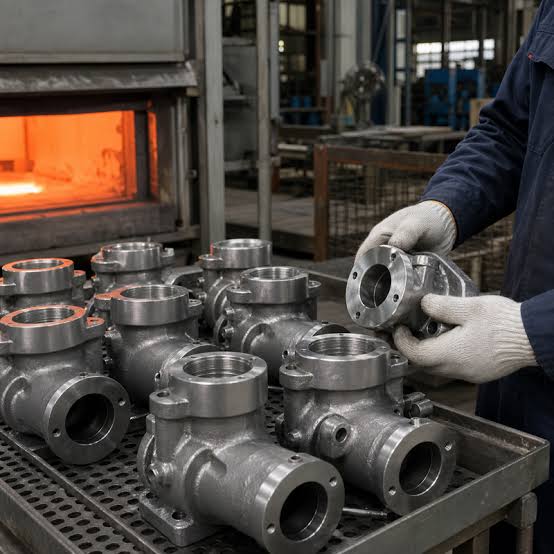
Why Vacuum?
When certain metals are molten, they react aggressively with air. Oxygen and nitrogen dissolve into the liquid metal, forming oxides and nitrides that weaken the casting and ruin its structure. Alloying elements in superalloys — like aluminium, titanium and reactive rare-earth additions — are especially prone to this.
Melting and pouring in a vacuum removes the air so the alloy stays clean, and it also lowers the amount of dissolved gas that would otherwise cause porosity. This is why high-performance nickel and cobalt alloys are almost always vacuum-cast.
Which Materials Need Vacuum Casting?
| Alloy group | Air-cast or vacuum? | Why |
|---|---|---|
| Carbon & stainless steels | Air is generally fine | Standard investment casting |
| Low / medium-alloy steels | Air allowed | Manageable oxide formation |
| Nickel-based superalloys | Vacuum | Reactive elements oxidize in air |
| Cobalt-based superalloys | Vacuum | High-temperature, oxidation-prone |
What Vacuum Casting Enables
- High-temperature components — parts that keep their strength where stainless would soften.
- Corrosion-resistant duty — in aggressive media and high-temperature environments.
- Clean, pore-free structures — essential for pressurized or sealing parts.
- Complex precision geometry — vacuum castings are produced by investment casting, so they combine superalloy performance with intricate shapes.
Typical uses include turbomachinery components, high-temperature valve and pump parts, and components in aggressive chemical or marine service.
Part Size Considerations
Vacuum furnaces are inherently more constrained than open-air furnaces, so part size is limited. As a working reference, nickel and cobalt alloy castings are commonly produced in the range of roughly 0.001 kg up to 25 kg. Confirm the exact limit with your foundry for your specific geometry, since envelope capacity varies by furnace.
At GRDH Precision
We operate vacuum melting furnaces specifically for nickel-based and cobalt-based alloys, covering a single-part weight range of about 0.001–25 kg — alongside our wider investment-casting capability up to 622 kg in conventional alloys.
Cost Reality Check
Vacuum casting is more expensive than standard air casting:
- Higher equipment and operating cost of vacuum furnaces.
- More expensive alloy inputs.
- Slower cycle times.
So use a superalloy only where the operating temperature or environment genuinely demands it — otherwise a stainless or alloy steel will give the needed performance at lower cost.
Need a superalloy component cast?
Send your drawing and describe the operating temperature and media. We'll advise whether vacuum casting is required and quote transparently.
Start a Project →← Back to Blog · Related: How Investment Casting Works · Casting Material Selection · Our Investment Casting Capability