3-Axis vs 4-Axis vs 5-Axis CNC Machining: Which Do You Need?
The number of axes decides what your part can look like, how tight it holds tolerance, and what it costs. This guide explains 3-, 4-, indexed and simultaneous 5-axis machining so you match the machine to the part instead of overpaying.
TL;DR — Key Takeaways
- 3-axis: the workhorse for flat faces, pockets, slots, plates and simple housings. Cheapest rate, but a new setup for every new face.
- 4-axis: adds rotation about one axis for cylindrical parts and multi-face work in a single setup. Cheaper than 5-axis and often enough.
- Indexed 5-axis (3+2): the rotary axes lock, then the machine cuts like a 3-axis machine from an angled direction.
- Simultaneous 5-axis: all five axes move together to keep the tool normal to a curved surface — impellers, turbine blades, deep cavities.
- More axes is not always better. Match the axis count to the geometry — over-specifying wastes money, under-specifying makes the part impossible.
1. What an Axis Actually Is
An axis is one controlled direction of motion. Linear axes (X, Y, Z) move in a straight line; rotary axes (A, B, C) turn around one. Saying 3-, 4- or 5-axis means how many independent directions the machine moves: three linear axes plus zero, one or two rotary axes.
A 3-axis machine has only X, Y and Z: the tool moves in three directions but always points straight down. A 4-axis machine adds one rotary axis — usually a table that spins the workpiece. A 5-axis machine adds two rotary axes, arranged as a tilting spindle head, a tilting table, or both.
Why 3-axis machines move the part — and 5-axis machines move the tool
There is a practical reason for these layouts. On a 3-axis machine the table only slides in X and Y, so reaching a new face means flipping the part by hand. On a 4-axis machine the table turns the part. On a 5-axis machine the extra rotary axes tilt the spindle head instead — cheaper and easier to control than spinning a heavy part on an expensive trunnion table.
Indexed vs simultaneous: two very different 5-axis machines
An indexed machine — also called 3+2 — positions and locks the two rotary axes, then cuts with only the linear axes moving: really a 3-axis cut from an angled direction. A simultaneous machine moves all five axes at once, keeping the tool tip perpendicular to a curved surface. Simultaneous machining makes impellers and turbine blades possible; indexed machining suits angled holes and many-faced parts.
2. Side-by-Side: 3-Axis vs 4-Axis vs 5-Axis
| Machine Type | What It Can Machine | Typical Tolerance | Surface Finish | Setups | Part Complexity | Hourly Rate (China) | Best-Fit Parts |
|---|---|---|---|---|---|---|---|
| 3-Axis | Flat faces, pockets, slots, steps, drilled holes on one or two faces | ±0.01–0.05 mm | Ra 0.8–3.2 μm | 2–5 | Low | $25–45/hr | Plates, brackets, prismatic housings, base plates, simple fixtures |
| 4-Axis | Everything 3-axis does, plus cylindrical features and several faces in one setup | ±0.01–0.03 mm | Ra 0.8–1.6 μm | 1–2 | Medium | $35–60/hr | Shafts, cams, gears, multi-face manifolds, tubular parts |
| 5-Axis (Indexed / 3+2) | Flat and drilled features on many faces, angled holes, compound angles | ±0.01–0.02 mm | Ra 0.4–1.6 μm | 1 | Medium–High | $60–90/hr | Complex housings, angled holes, dovetails, mould inserts |
| Simultaneous 5-Axis | Sculpted 3D surfaces, deep cavities, undercuts, thin walls | ±0.01–0.02 mm | Ra 0.4–0.8 μm | 1 | Very High | $60–120/hr | Impellers, turbine blades, contoured surfaces, deep cavities |
3. 3-Axis: The Workhorse
3-axis milling is the foundation of CNC machining. The tool stays perpendicular to the work while the table moves the part in X, Y and Z — which defines both its strengths and its limits. It is the most common machine class in China and the cheapest to schedule.
What it does well
- Flat faces, steps, pockets, slots and ribs — classic prismatic features
- Drilled, tapped and reamed holes perpendicular to the face
- Large, simple parts where table size matters more than extra axes
- Tight tolerance on a single plane, with no rotary error added
Cost
CNC machining cost." data-zh="在中国,一台 3 轴立式加工中心的主轴工时费约为每小时 $25–45。对于简单零件,成本的大部分是装夹和编程而非切削,这就是为什么一个两面加工的板可能只要 $60–120,而四面加工板要贵得多。关于完整拆解,请参阅我们的CNC 加工成本指南。">In China a 3-axis vertical machining centre runs about $25–45 per hour of spindle time. For a simple part, most of the cost is setup and programming rather than cutting, which is why a two-face plate can cost $60–120 and a four-face plate much more. For a full breakdown, see our guide to CNC machining cost.
4. 4-Axis: Adding Rotation
A 4-axis machine is a 3-axis machine with one rotary axis — usually a table turning the workpiece around a horizontal (A) or vertical (B) axis. The tool still points straight down, but the part now spins, so new faces rotate into position without a re-chuck.
When a fourth axis pays off
- Cylindrical features: flats, keyways or slots on round bar without re-fixturing
- Hole patterns and slots arranged around a cylinder, such as oil galleries
- Multi-face parts: three or four sides in one setup, not three or four separate ones
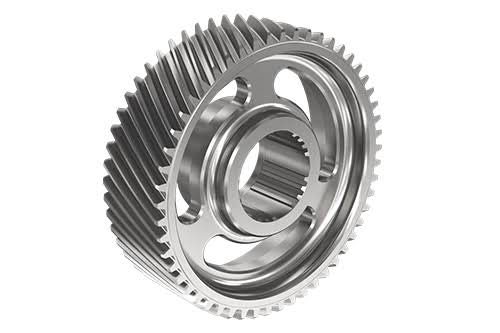
- Gears, cams and worm wheels where tooth or lobe geometry wraps around the part
The big win is one-setup machining. Every re-chuck loses accuracy to the second setup's offset, and time to re-fixturing, re-zeroing and inspection. A fourth axis often removes two or three setups — that is where the saving comes from, not a lower hourly rate.
Cost
A 4-axis machine runs $35–60 per hour in China — a small premium over 3-axis for rotary capability and fewer setups. Whenever your part is round or has features on three or more faces, ask for both options.
5. 5-Axis: When Complexity Demands It
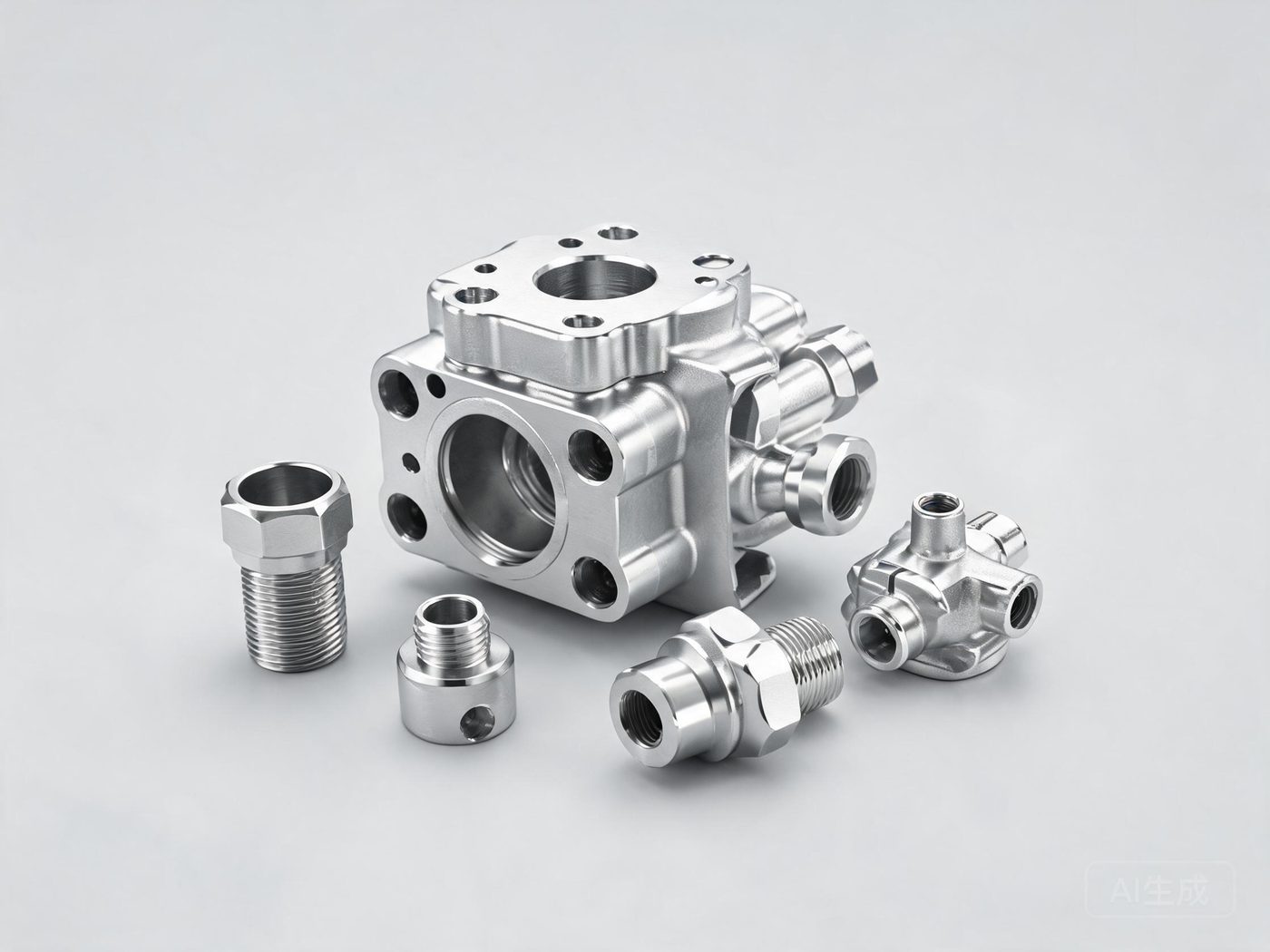
5-axis machining adds a second rotary axis. With two rotations plus three linear movements, the tool reaches almost any point from almost any direction — unlocking geometries no 3- or 4-axis machine can produce in reasonable setups. But it splits into two classes you must not confuse.
Indexed 3+2: the practical middle ground
An indexed machine positions and clamps the two rotary axes, then cuts with the three linear axes only. Because nothing rotates while cutting, it holds tolerance almost as well as 3-axis, yet reaches angled holes, compound-angle faces and five-sided parts in one setup. For most complex prismatic housings, 3+2 is the sweet spot.
Simultaneous 5-axis: true contouring
A simultaneous machine keeps all five axes moving together so the tool tip stays perpendicular to a changing surface. This is the only practical way to make impellers, turbine blades, blisks and sculpted aerodynamic surfaces, and the answer for deep cavities and undercuts a straight tool cannot reach. Programming takes two to four times longer and the rate is the highest.
Why fewer setups can beat a tighter hourly rate
It sounds backward: a 5-axis machine costs two to three times more per hour, so how can it be cheaper? Because the rate is charged per hour, not per part. When 5-axis finishes a part in one cycle instead of three 3-axis setups, you remove fixture cost, re-chucking time and the tolerance stack-up from every re-clamp — on a complex housing these easily outweigh the higher rate. Rule of thumb: the more faces and the more contoured the geometry, the more likely 5-axis wins.
6. How Axis Count Changes Your Quote
When a supplier quotes a machined part, four cost drivers move with the axis count: hourly rate, setups, fixtures and CAM programming. Separating them is the only way to compare a 3-axis and 5-axis quote fairly.
Machine hourly rates in China
- 3-axis: about $25–45 per hour of spindle time
- 4-axis: about $35–60 per hour
- 5-axis: about $60–120 per hour, depending on capability and machine size
Setup cost
Every setup carries a fixed cost: mounting the fixture, dialling in the part, setting the zero and a first-article check. Each extra 3-axis setup adds roughly 30–90 minutes of non-cutting time, billed like any other hour. On a ten-piece order that is often a bigger lever than the hourly rate.
Programming cost
5-axis CAM programming is genuinely harder: managing tool vectors, gouge checking, collision avoidance and post-processing typically takes two to four times longer than 3-axis work. On a ten-piece order that one-off cost dominates the quote; on a 5,000-piece run it fades into pennies per part.
How to compare quotes fairly
- Ask for the quote split into setup, machining, fixture and programming lines
- State the exact tolerance and finish needed, so nobody quotes 5-axis for a 3-axis part
- Give the annual volume and lot size — 5-axis economics flip between 10 and 10,000 pieces
- Normalise by lead time and scrap, because a cheaper rate with high rework is not cheaper
CNC tolerances and surface finish (Ra), so the drawing drives the machine choice." data-zh="公差和光洁度声明是报价悄悄不同的地方。在你过度规定其中任何一项之前,请阅读我们关于 CNC 公差和表面光洁度(Ra)的说明,让图纸驱动机床选择。">Tolerance and finish claims are where quotes quietly differ. Before you over-specify either, read our notes on CNC tolerances and surface finish (Ra), so the drawing drives the machine choice.
7. Worked Example: A Complex Aluminium Housing
Take a 6061-T6 aluminium housing, roughly 400 × 300 × 120 mm, with pockets on four faces, two angled ports and a compound-angle flange. Annual volume is 50 pieces; the sealing faces must hold ±0.02 mm. Should it run on a 3-axis machine in three setups or a 5-axis machine in one? Figures below are typical of Chinese supplier pricing.
| Metric | 3-Axis (3 setups) | 5-Axis (1 setup) |
|---|---|---|
| Setup count | 3 | 1 |
| Fixtures required | 3 (including one compound-angle fixture) | 1 (self-centering vice or tombstone) |
| Effective cycle time per part | 5.0 h | 1.8 h |
| Machine hourly rate | $35/hr | $85/hr |
| Machining cost per part | $175 | $153 |
| Fixture cost (one-off) | $3,200 | $1,500 |
| Programming cost (one-off) | $700 | $1,800 |
| Achievable tolerance (sealing faces) | ±0.04 mm | ±0.015 mm |
| Lead time (50 pcs) | 15–18 days | 8–10 days |
| Total for 50 pcs (incl. fixtures and programming) | $12,650 | $10,950 |
On paper the 5-axis rate is 2.4 times higher, yet the 5-axis route wins on every count: lower total cost, tighter tolerance and a lead time nearly half as long. The 3-axis route spends its money on three fixtures and three times the handling, while the 5-axis machine pays for itself in one cycle. Look for this pattern when a part has features on four or more faces with compound angles.
8. Common Misconceptions
Misconception 1: 5-axis is always more accurate
Accuracy comes from build quality, thermal stability, tooling and workholding — not the axis count. A well-maintained 3-axis machine on a stable base can hold ±0.01 mm all day, while a neglected 5-axis machine with a worn rotary axis can hold far worse. Extra axes reduce setups and their stack-up; they do not raise accuracy by themselves.
Misconception 2: more axes always costs more
More axes means a higher hourly rate, but not necessarily a higher part price. As the example above shows, a 5-axis route can be cheaper in total once you count the fixtures and setups it removes. What drives cost is the total setup count and programming burden — not the axis label.
Misconception 3: any shop can hold ±0.01 mm
Holding ±0.01 mm takes a capable machine, a temperature-controlled room, sharp tooling, rigid workholding and an experienced programmer — not just a number on a drawing. Many shops advertise it; far fewer repeat it across a production run. Always ask for a first-article inspection report and, for critical dimensions, capability (Cpk) data.
Misconception 4: you always need the most capable machine
The best machine for your part is the cheapest one that can make it to spec, repeatably. Putting a flat plate on a 5-axis machine does not make it better — only more expensive. Buyers who cannot read geometry pay for capability they never use. The skill is choosing the minimum capable class.
How GRDH Precision Helps
casting vs forging vs CNC and sourcing CNC parts from China." data-zh="我们审查您的图纸,把它匹配到正确的机床等级和经审核的中国供应商,帮您避免两个相反的失误:过度选型是为一个从不使用 5 轴能力的零件买单,选型不足则无论多少钱都做不出公差。我们评估几何、公差、光洁度、材料和用量,选出最低能力等级,然后获取可对比的报价,并管理首件检测直至交付。如果铸件或锻件毛坯比实心料加工更划算,我们会如实相告——请参阅铸造 vs 锻造 vs CNC和从中国采购 CNC 加工件。">We review your drawing, match it to the right machine class and audited Chinese supplier, and help you avoid two opposite mistakes: over-specification pays for 5-axis capability a part never uses, while under-specification cannot be made to tolerance at any price. We assess geometry, tolerance, finish, material and volume, pick the minimum capable class, then get comparable quotes and manage first-article inspection to delivery. If a casting or forging blank beats machining from solid, we say so — see casting vs forging vs CNC and sourcing CNC parts from China.
9. Conclusion
Axis count is not a badge of quality — it describes how many directions the tool can move. 3-axis is cheapest and covers most plates, brackets and prismatic parts. 4-axis adds rotation for cylindrical and multi-face work at a small premium. 5-axis — indexed 3+2 or simultaneous — unlocks angled features, deep cavities and sculpted surfaces in one setup, and on complex parts can be cheapest once you count the fixtures and setups it removes.
Not Sure Which Machine Your Part Needs?
Send us your drawing and we will tell you the minimum capable machine — 3-axis, 4-axis or 5-axis — and match it to an audited Chinese supplier.
Start a Project →